

For a holiday cookie exchange, two or three recipes is the right target — enough variety to look like a curated assortment without a three-day baking marathon. Choose at least one that batches into a large yield per recipe (bars and rolled balls are the most efficient for volume), and pair it with something visually distinct so the tin reads as a real assortment rather than one thing in three sizes. Start your prep a few days out with anything that chills or sets, since those hold well and leave your oven free for last-minute bakes.
This is the time of year when exchange invitations start appearing on my phone and I start thinking about what will actually hold up — not just taste good fresh out of the oven, but survive two days in a tin, a car ride across town, and a table full of other people’s cookies. The 12 recipes below are the ones I come back to for that reason: they’re portable, they batch well, and most of them are just as good on day three as on day one.
How to spread the baking across several days
When you are making two or three different recipes for an exchange, trying to do it all in one afternoon is a fast path to burning something or running out of oven space. The most forgiving approach is a three-day plan: start with anything that chills or freezes — fat bombs and no-bake bars can go in on Day 1 and only improve with a rest overnight. Day 2 is for longer oven bakes like brownies, which you want to cool and rest before cutting and packing anyway. Save your quickest oven bakes — anything done in under 40 minutes — for Day 3, right before you assemble the tin. That rhythm means you are never racing the clock on the day it matters.
What holds up in a tin versus what needs its own box
Dense items hold their shape and texture well in a cookie tin: fudgy bars, rolled and dipped balls, and molded chocolate bites all stack neatly with a layer of parchment between them. Muffins and cupcakes are a different situation — they get crushed in a standard tin and really need a rigid cupcake box, which changes the gifting equation. For a communal exchange plate where guests help themselves, bite-size rollable or molded pieces are the most practical because no one has to find a knife. If your tin is going in a car or being shipped, stick with bars and balls.
Planning for nut allergies at the table
Cookie exchanges are one of the few settings where someone almost always has a nut allergy, and arriving with a clearly labeled nut-free tin makes you the person everyone gravitates toward. The most straightforward approach is choosing recipes built on coconut flour or ground seeds as the base — those skip almonds entirely and bake like a standard cookie. The Nut-Free Snowball Cookies are a strong choice for this: the double coating of powdered sweetener looks festive, and the sunflower and pumpkin seed base means nut-allergic guests can eat them with confidence. Always label your tin so guests don’t have to guess.
The recipes
Bars and brownies
Dense, sliceable options that stack cleanly in a tin, cut well after a rest, and hold their texture for days.
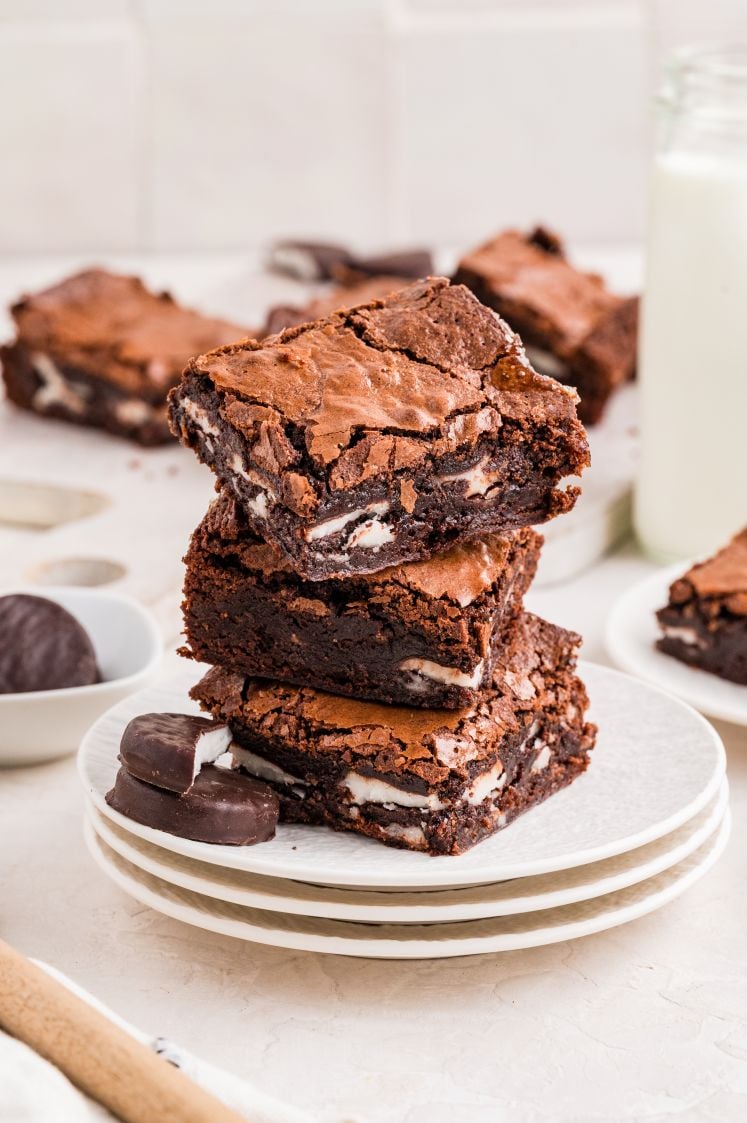
- Peppermint Patty Brownies (4g protein) — A layer of mini peppermint patties tucked right into the middle of rich, fudgy brownie batter — these look impressive and taste even better than they sound. Done in about 115 minutes.
- No-Bake Chocolate Chip Almond Butter Fat Bomb Bars (3g protein) — Dairy-free, egg-free, and vegan almond butter bars with chocolate chips — no oven required, and done in about 135 minutes.
Cookies
Classic baked formats that look right on an exchange plate and work well when made in full batches.
- Nut-Free Snowball Cookies (2g protein) — Soft, buttery cookies made with ground sunflower and pumpkin seeds in place of the traditional nuts, rolled in powdered sweetener while still warm and dusted again after cooling for a thick white coating. Done in about 60 minutes.
- Nut-Free Chocolate Chip Cookies (4g protein) — Soft, chewy, and nut-free, with no grains and no refined sugar. Done in about 50 minutes.
Balls, bites, and fat bombs
Rollable and moldable pieces that require no cutting and hold their shape without a container.
- Chocolate Peanut Butter Balls (Peanut-Free Option) (2g protein) — Peanut butter, melted butter, and powdered sweetener rolled into 16 balls and dipped in melted sugar-free chocolate chips — no baking involved, and SunButter or almond butter makes them peanut-free. Done in about 60 minutes.
- 2-Ingredient Chocolate and Sunflower Seed Bites (3g protein) — Raw sunflower seeds toasted until golden, stirred into melted monk fruit-sweetened chocolate chips, and frozen in a silicone mold to make 10 bites. Done in about 30 minutes.
- Dark Chocolate Peppermint Patty Fat Bombs (1g protein) — Rich dark chocolate, a creamy filling, and mint — flavors that echo a York peppermint patty. Build these into your prep schedule early; they take about 200 minutes from start to finish.
- Chocolate Chip Cookie Dough Fat Bombs (2g protein) — Cookie dough flavor in a set, cold fat bomb — coconut-free, refined-sugar-free, and available with a nut-free substitution. Done in about 85 minutes.
Muffins and cupcakes
Baked in a muffin tin and best packed in a rigid box — a strong pick for a hostess gift rather than a communal exchange plate.
- Triple Chocolate Zucchini Muffins (7g protein) — Nut-free, dairy-free, and grain-free baked muffins built around a serious chocolate craving. Done in about 35 minutes.
- Chocolate Chip Banana Bread Muffins (4g protein) — Made with coconut flour and banana extract, with 12 golden muffins ready in about 35 minutes.
- Chocolate Chip Muffins (4g protein) — Bakery-style muffins made in one bowl with coconut flour, butter, and cream cheese — 12 ready in about 35 minutes.
- Chocolate Strawberry Cupcakes (6g protein) — Made without almond flour or coconut flour, so they work for anyone who needs both nut-free and coconut-free options at the holiday table. Done in about 50 minutes.
Frequently asked questions
How many recipes should I make for a holiday cookie exchange?
Two or three recipes is the right number for most exchanges — enough to give people variety without leaving you exhausted. Prioritize at least one that batches into a large yield per recipe, since most exchanges ask you to bring enough for every guest to take one of each item. A good pairing is one dense, fudgy piece alongside one bite-size or rollable piece, which reads as an intentional assortment rather than more of the same thing.
How far in advance can I make holiday cookie exchange treats?
Dense items — brownies, no-bake bars, and rolled and dipped balls — hold well for three to four days in an airtight container in the refrigerator, so those can go in early in the week. Baked cookies hold well for one to two days at room temperature and are better made closer to your event. Muffins and cupcakes are best within a day of baking, so schedule those last.
What holiday sweets travel best in a gift tin?
Dense, low-moisture items travel the best — fudgy bars, rolled balls, and molded chocolate bites hold their shape when stacked with parchment layered between them. Muffins and frosted cupcakes get crushed in a standard tin and need a rigid box instead. If your gift is going in a car or being shipped, bars and balls are the safer call.
What are good nut-free options for a cookie exchange?
The most reliable approach is choosing recipes built on coconut flour or ground seeds as the base rather than almond flour — they behave like traditional baked goods and contain no nuts. The Nut-Free Snowball Cookies are a strong pick because the thick powdered coating looks festive and the sunflower and pumpkin seed base makes them genuinely safe for nut-allergic guests. Always label your tin clearly so people can eat with confidence.
Every recipe here lives on Real Balanced already, tested in my kitchen and ready to go. Tap any title for the full ingredients, steps, and photos.











Leave a Reply