


Serve these on a slow weekend morning alongside a pot of coffee, then bookmark Bacon Cheddar Jalapeño Scones and Low-Carb Cranberry Orange Muffins for your next coconut flour bake.

The moment Glazed Orange Scones come out of the oven, the kitchen fills with a warm citrus scent — the kind that makes a Saturday morning feel worth slowing down for. The coconut flour base gives them a tender, dense crumb, and the monk fruit glaze sets to a crisp shell that cracks when you press through it. Finish each one with fresh orange zest and they look as polished as anything from a bakery case.
This recipe was developed with allergy-friendly baking in mind — coconut flour replaces almond flour, keeping these completely nut-free and safe to set out for anyone with a nut allergy. They are also dairy-free (coconut oil and coconut milk throughout), grain-free, gluten-free, refined-sugar-free, and paleo-compliant. The glaze section comes with a built-in baking trick too: you make powdered sweetener on the spot by pulsing granulated monk fruit sweetener in a blender for a few seconds, so there is no need to buy a separate bag of powdered sweetener.
Every recipe on Real Balanced is tested before it’s published — read about how we develop and test our recipes.

As an Amazon Associate, I earn from qualifying purchases.
💛 Why you’ll love this recipe
- Bright citrus from two sources: Orange extract goes into the scone dough itself, and fresh orange zest is scattered on top after glazing — the citrus flavor carries through from first bite to last.
- A glaze made from scratch, including the powdered sweetener: Pulse granulated monk fruit sweetener in a blender until it reaches a fine powder, mix with melted coconut oil and coconut milk, and you have a smooth glaze that sets firm on a cooling rack. No store-bought powdered sweetener required.
- Simple one-circle shaping: Press the entire dough into one thick circle on the baking sheet, cut into 8 wedges, and bake them together without separating. After baking, run a knife through the wedge lines again before glazing — no individual hand-shaping required.
- Nut-free by design: Coconut flour replaces almond flour or any other nut flour entirely. The coconut flavor is mild and does not compete with the orange, and the recipe is safe for anyone baking with a nut allergy in mind.
- Dairy-free throughout: Coconut oil and unsweetened coconut milk replace butter and cream in both the scone dough and the glaze, so no dairy swaps are needed on your end.
- Naturally free of gluten, grains, and refined sugar: Made with coconut flour and monk fruit sweetener, these are gluten-free, grain-free, and free of refined sugar — and since there is no dairy, soy, or gluten, they are also paleo-compliant and vegetarian.
⏲ How to make this recipe
The glaze that tops these scones is SO EASY to make and is a perfect stand-alone recipe that I recommend having on-hand for any time you want to add a new depth of flavor to your low-carb baked goods!
This recipe will also show you a fun baking tip that I’ve learned and that I use constantly: how to instantly make powdered sugar!
Instead of having to buy a bag of both granulated low-carb sugar and a bag of low-carb powdered sugar, you can quickly turn granulated into powdered with just with a few pulses of your blender! Add the granulated monk fruit sweetener to your high-speed blender, pulse, and voilà! Powdered monk fruit sweetener is as easy as that!

👉 Easy ingredient swaps
- Orange extract: One reader reported great results swapping orange extract for jasmine extract plus vanilla extract. Concentrated orange juice is another option for citrus flavor — use it in the same quantity as the orange extract.
- Coconut milk in the glaze: The recipe calls for 2–3 tablespoons. Start with 2 and add the third only if the glaze is too thick to dip the scones into smoothly.
- Monk fruit sweetener: This recipe uses Lakanto Classic Monk Fruit Sweetener, a natural zero-calorie sweetener that behaves like regular sugar in baking. If you use a different brand, confirm it measures 1:1 like sugar — some blends are more concentrated.
- Coconut flour: Coconut flour cannot be swapped 1:1 for almond flour or all-purpose flour. The liquid and egg quantities in this recipe are calibrated specifically for coconut flour‘s high absorption, and substituting a different flour will change the texture and structure significantly.
✨ Variations
- Lemon version: Swap the orange extract for lemon extract and use lemon zest in place of orange zest for a sharper, brighter citrus flavor.
- Double citrus glaze: Add a few drops of orange extract to the glaze along with the coconut milk for a more pronounced orange flavor in every dip.
- Extra vanilla: Increase the vanilla extract from ½ teaspoon to 1 full teaspoon for a slightly richer, rounder flavor without changing the texture.
- Savory direction: The same coconut flour scone base can anchor a completely different recipe — the Bacon Cheddar Jalapeño Scones on the blog use the same method for a savory application.
〰️ How to serve
- Serve these the day they are made when possible — the glaze is crispest before it has time to soften, and the citrus scent is strongest fresh from the oven.
- For a full weekend brunch spread, pair them with a savory main like Sausage Breakfast Casserole or something sweet and complementary like Applesauce Coffee Cake.
- For the cleanest glaze, dip the top of each scone into the glaze in the shallow dish, then set them on a cooling rack and leave them undisturbed until the glaze hardens before moving.
- These are a strong choice for a bridal shower or weekend party — the circle-and-slice method keeps them neat and easy to plate, and the nut-free, dairy-free recipe means more guests can eat them.
💬 FAQs
Why is my scone dough too wet or liquidy?
Coconut flour absorbs liquid more slowly than other flours, so the dough may look too loose right after mixing. Let it sit for 3–5 minutes and check again — it usually firms up as the flour absorbs the eggs. If your kitchen is warm, the dough may remain softer than expected; in that case, shape individual wedges by hand directly on the parchment rather than cutting from a circle, as some readers have done successfully.
Why do you bake the wedges as one circle instead of separating them first?
Baking the wedges as a joined circle helps them hold their shape and stay moist on the inside. Separating them before baking can cause the cut edges to dry out. Once they come out of the oven, run a knife through the score lines again — the dough sometimes bakes back together slightly at the edges — and then let them cool before glazing.
How do I make powdered sweetener from granulated monk fruit sweetener?
Add the granulated monk fruit sweetener to a blender or food processor and pulse until it reaches a fine powder. This takes only a few seconds and means you only need one bag of sweetener for the whole recipe — no separate powdered version required. The powdered sweetener dissolves smoothly into the melted coconut oil and coconut milk to form the glaze.
Why does the nutrition label show a high total carbohydrate number if the recipe uses monk fruit sweetener?
Monk fruit sweetener is counted in the total carbohydrate figure on standard nutrition labels, which can look unexpectedly high at first glance. However, monk fruit sweetener is not absorbed by the body the same way sugar is. There is a disclaimer below the recipe card that explains exactly how the carbohydrate counts in this recipe are calculated — worth reading if the label number surprised you.
📚 More recipes to try


🍽 Recipe
Email Recipe
Enter your email below and we’ll send you this recipe!
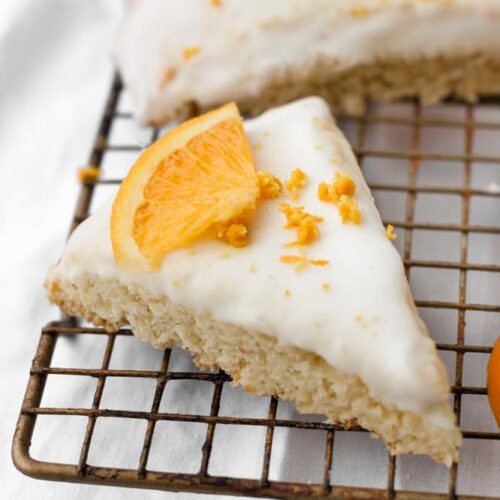
Glazed Orange Scones
Ingredients
Scones
- ¾ cup coconut flour
- 3 tablespoons classic monk fruit sweetener
- 2 teaspoons cream of tartar
- ¾ teaspoon baking soda
- ¼ teaspoon salt
- 4 eggs, beaten
- ¼ cup coconut oil, room temperature
- 1 tablespoon orange extract
- ½ teaspoon pure vanilla extract
Glaze
- ⅓ cup classic monk fruit sweetener
- 2 tablespoons coconut oil
- 2-3 tablespoon unsweetened coconut milk, room temperature or slightly warmed
Garnish
- Zest of small orange
Instructions
- Preheat oven to 350 degrees and line baking sheet with parchment paper.
- To a mixing bowl, add coconut flour, classic monk fruit sweetener, cream of tartar, baking soda, and salt. Whisk until all ingredients are fully incorporated.
- To mixing bowl, add beaten eggs, coconut oil, orange extract, and vanilla extract. Mix with electric mixer until wet and dry ingredients are well-combined.
- On top of prepared baking sheet, form dough into 1 1/2 inch thick circle and cut into 8 wedges. Do not disperse wedges (leave them in a circle to bake).
- Bake scones for 18-20 minutes.
- Remove scones from oven, slice knife through wedges again as the dough may have slightly baked together, and allow to cool.
- While scones cool, for the glaze, pulse monk fruit sweetener in blender or food processor until powdered.
- Melt coconut oil in microwave and, once melted, add to powdered classic monk fruit sweetener.
- Pour in 2 tbsp coconut milk and pulse in blender until well-combined and a glaze forms. If glaze mixture is too dense, add additional tbsp of coconut milk.
- Transfer glaze from blender to shallow dish or plate. Carefully dunk top of scones in glaze and set on cooling rack to harden.
- Garnish glazed scones with orange zest and enjoy!
















Leave a Reply