

You’ll love this recipe if you like this Pickled Okra and Bacon Onion Jam.

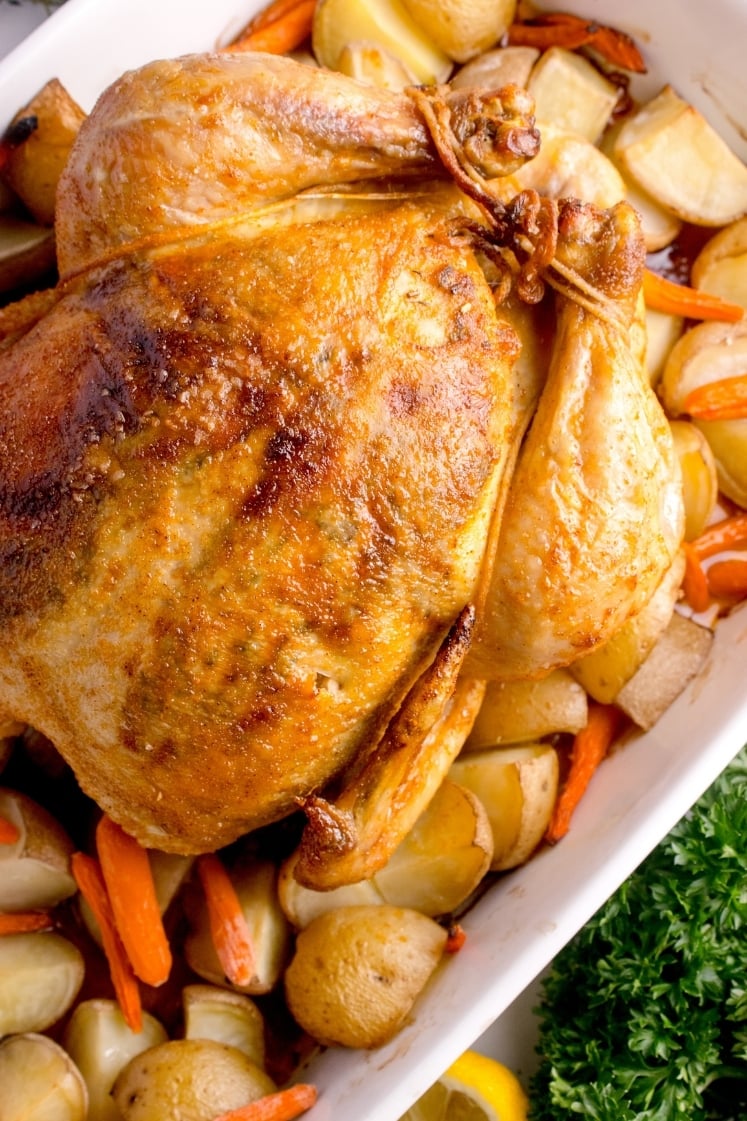
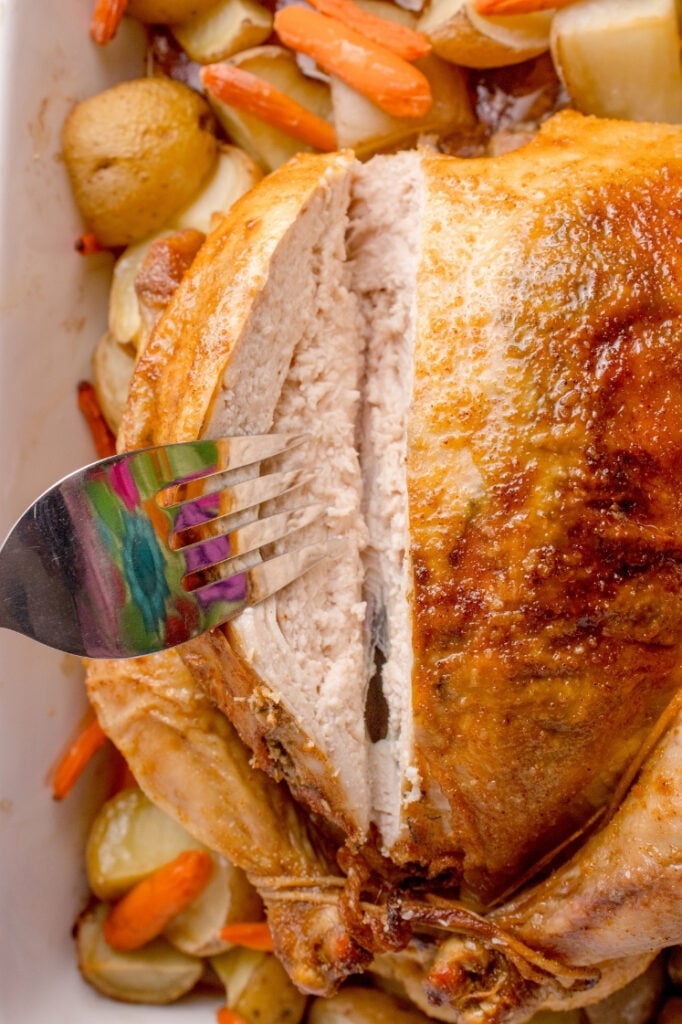
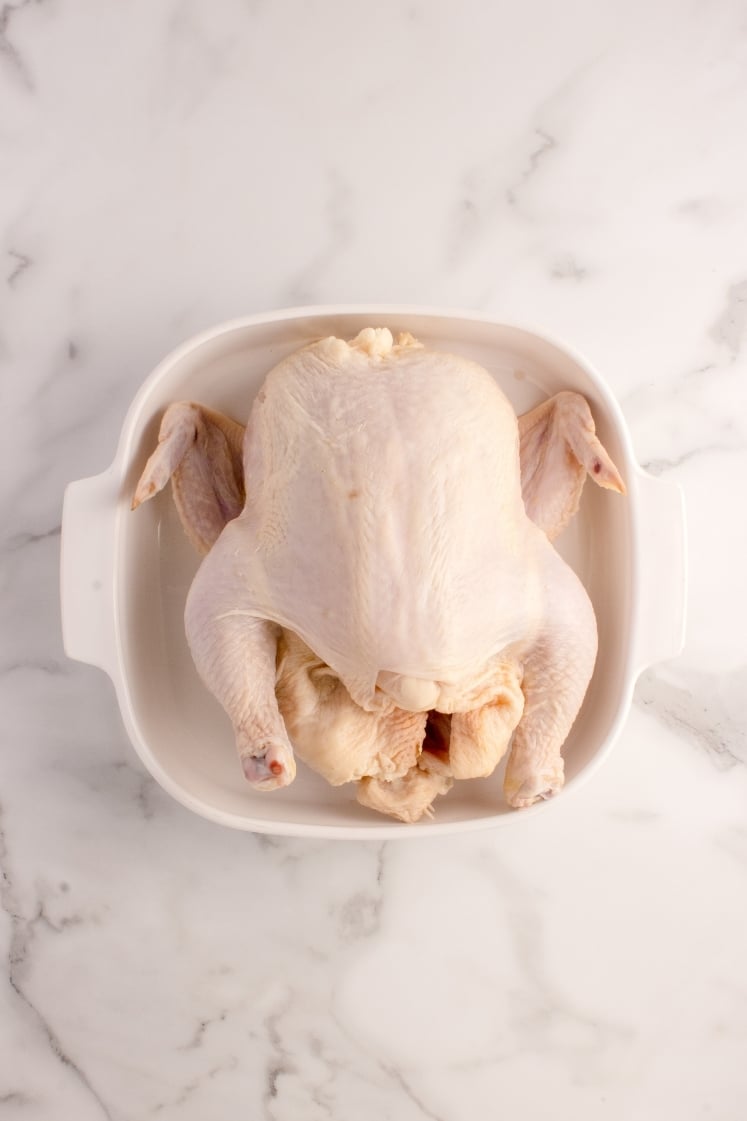
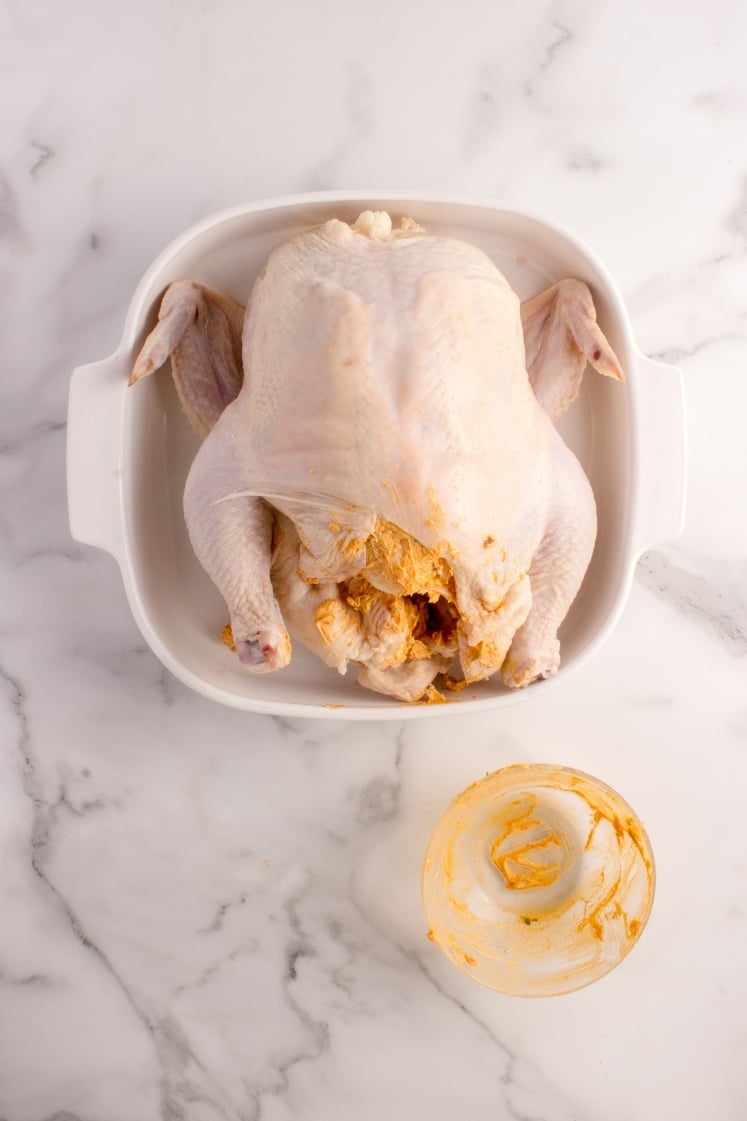
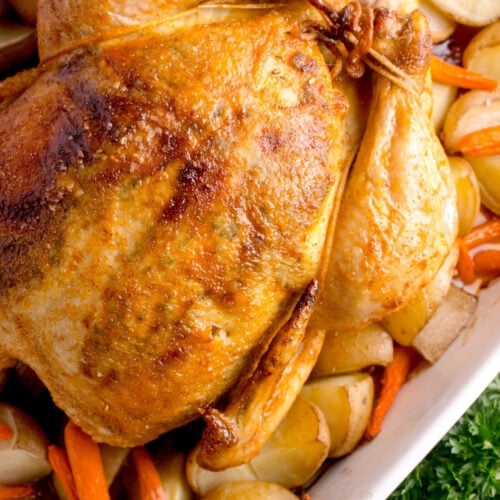
Start by patting the chicken very dry with paper towels — this is the step most people skip, and it’s the one that makes the biggest difference. Moisture on the skin steams instead of browns, so the drier it goes in, the crispier it comes out. Once it’s dry, you lift the skin gently with your fingers and smooth the garlic-herb butter directly underneath, which is where the real flavor work happens. As the chicken roasts, that butter melts slowly into the meat, basting it from the inside and keeping the breast juicy all the way through. Any remaining butter goes inside the cavity too, so every part of the bird picks up that herb and garlic flavor.
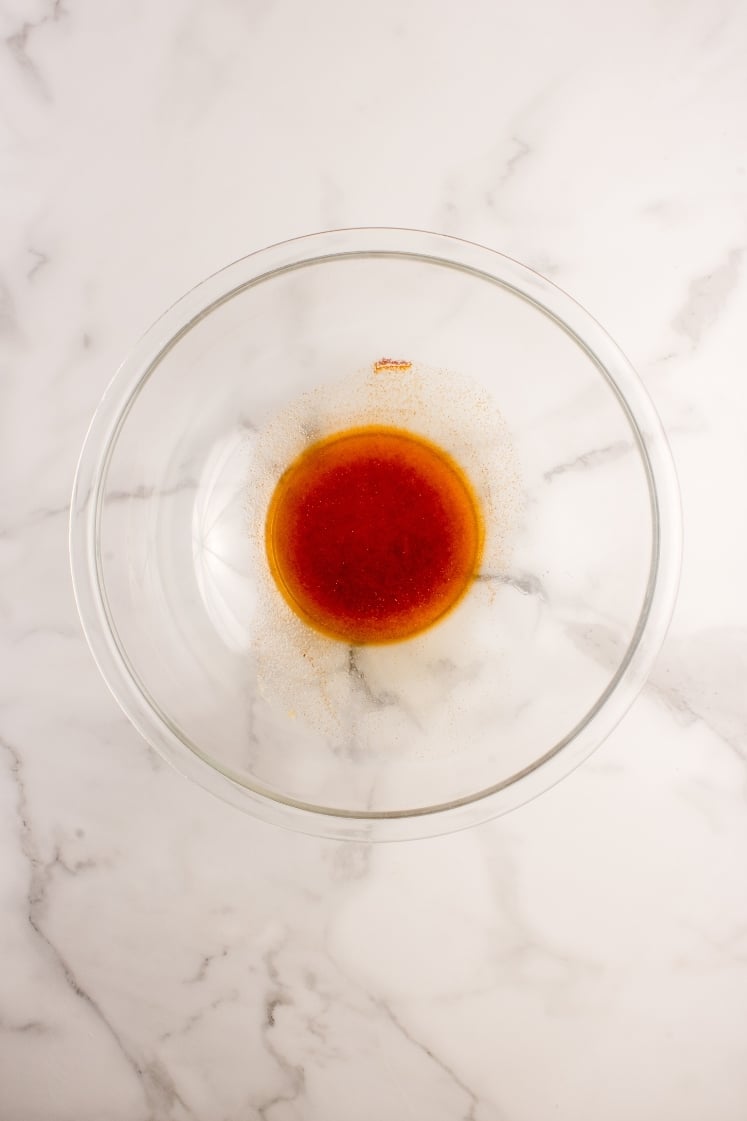
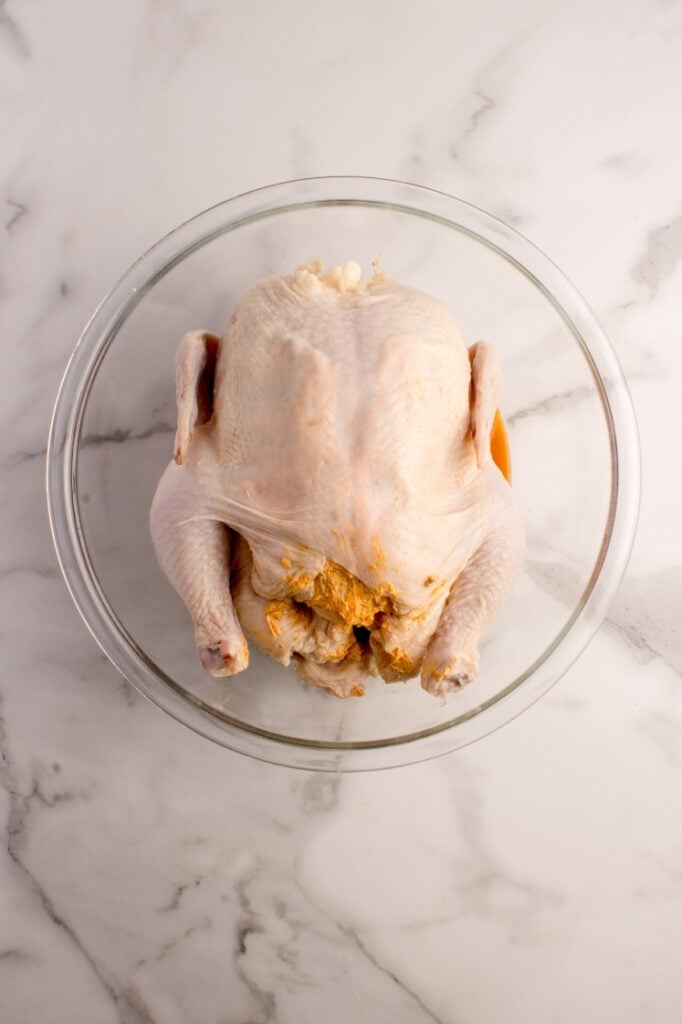
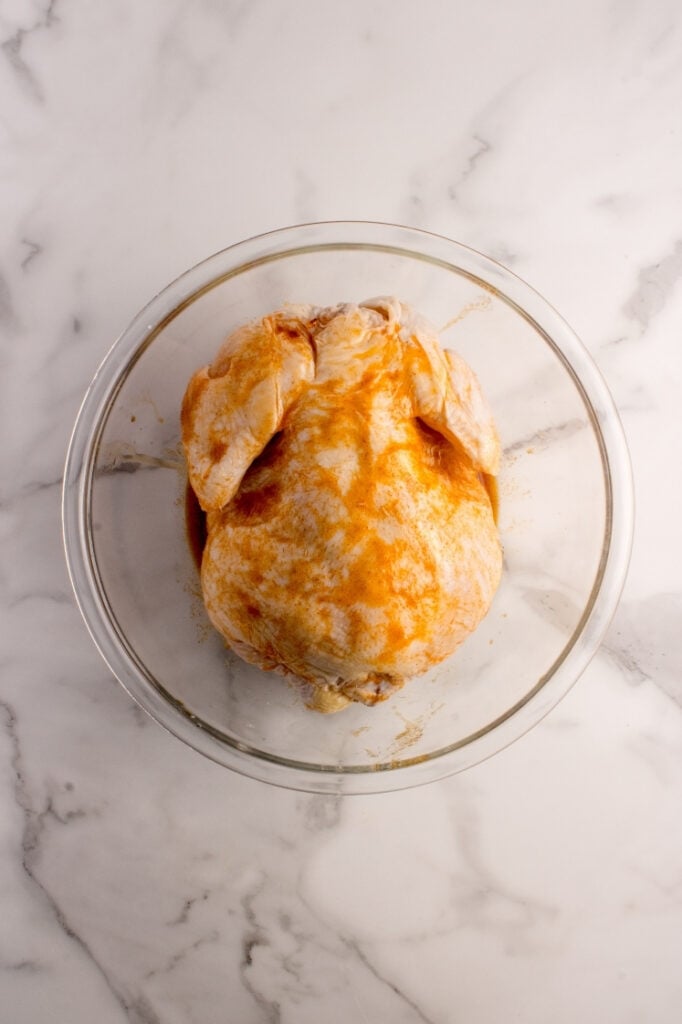
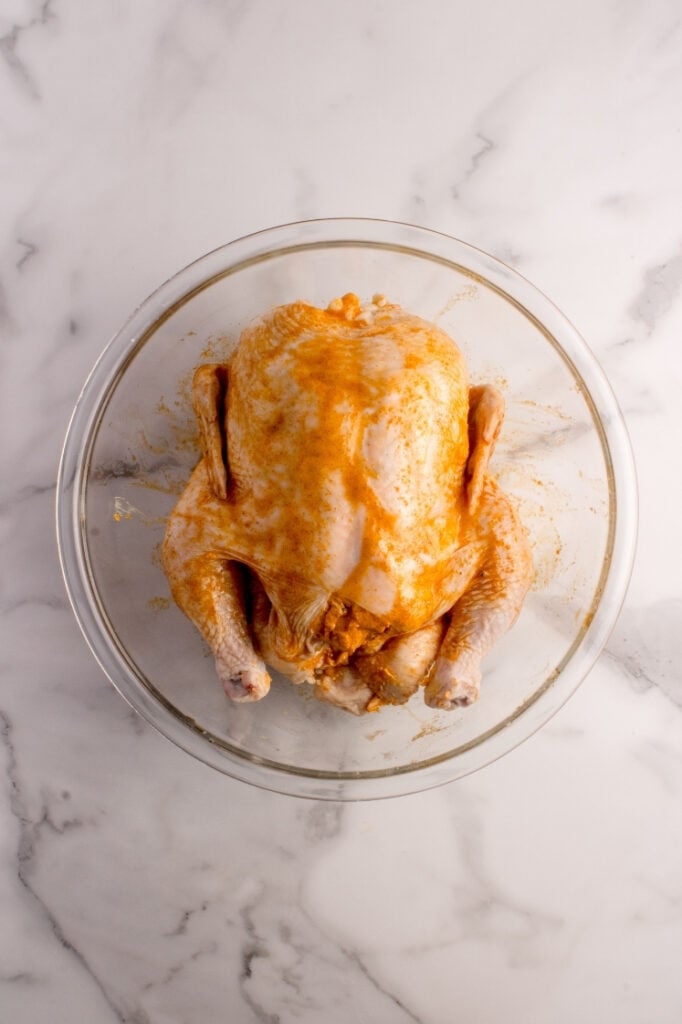
The outside rub — oil, paprika, garlic powder, and onion powder goes on last and is what gives the skin that deeply golden color as it roasts. Taking the chicken out of the fridge before it goes in is one of those small steps that makes a noticeable difference in how evenly it cooks through. If you want a built-in side dish, tuck potatoes, carrots, or onions around the bird and they’ll roast right in the drippings while the chicken does its thing. Once it comes out of the oven, give it at least 10 minutes before you carve so the juices have time to settle back into the meat, then spoon those pan juices over the top before bringing it to the table. Pair it with mashed potatoes, a simple salad, or crusty bread and you’ve got a dinner worth sitting down for.
As an Amazon Associate, I earn from qualifying purchases.
💛 Why you’ll love this recipe
- Garlic-herb butter under the skin keeps the meat juicy and flavorful all the way through.
- Crispy, golden skin from the two-layer seasoning method.
- Simple ingredients: butter, garlic, fresh herbs, oil, and pantry spices.
- Makes enough for a full dinner with plenty left for wraps, salads, or sandwiches.
- Pan juices make a natural sauce right in the roasting pan.
- Versatile leftovers: use the chicken meat in sandwiches, salads or wraps; pan juices into gravy and chicken bones for stock.
➡️ Ingredients
⏲ How to make this recipe
👉 Easy ingredient swaps
- Fresh rosemary and thyme: Use ½ teaspoon of each dried if fresh herbs aren’t available. You can also swap in fresh sage or tarragon for a slightly different but equally good flavor.
- Paprika: Sweet or smoked both work. Smoked adds more depth and a slightly darker color. For a bolder heat, a small amount of chipotle powder can be used instead.
- Unsalted butter: Ghee works well and has a higher smoke point. Plant-based butter also works if you prefer a dairy-free option.
- Cooking oil: Vegetable, canola, or avocado oil all work for the outside rub. Light olive oil is fine too — just avoid extra-virgin since it has a lower smoke point at high roasting temperatures.
- Fresh garlic: Roasted garlic paste gives a more mellow, sweet flavor in the compound butter. Garlic powder is used in the outside rub and works well swapped for granulated garlic too.
- Salt: Sea salt or kosher salt both work well. White pepper can be used in place of black pepper for a subtler look on the skin.
✨ Variations
- Spatchcocked chicken: Remove the backbone and flatten the bird before roasting. It cooks significantly faster and gives you even crispier skin all over since more surface area is exposed to the heat.
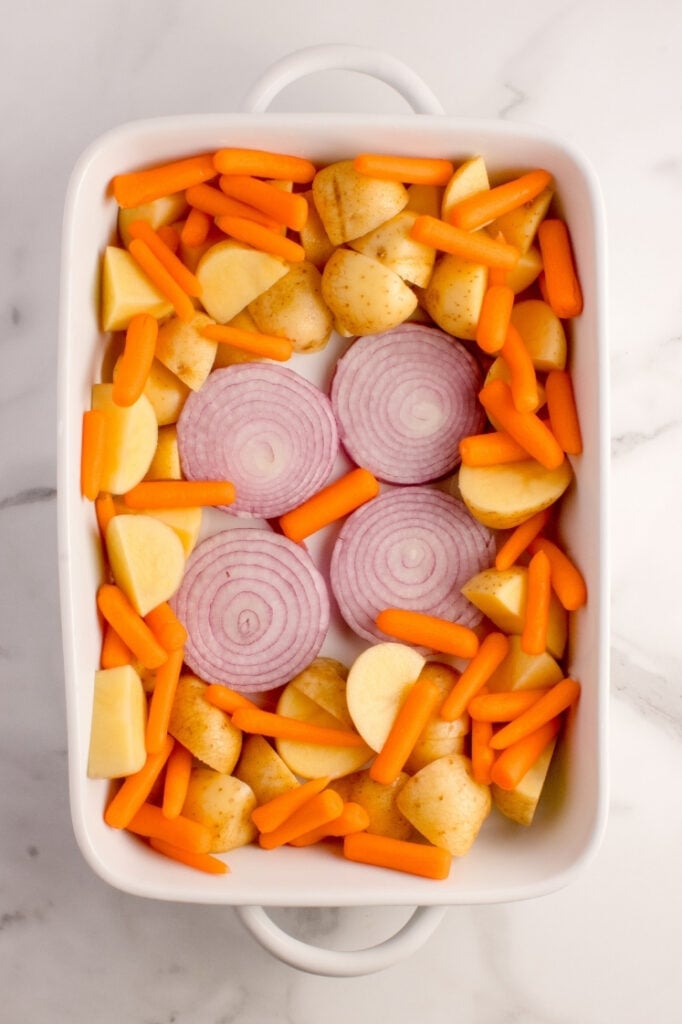
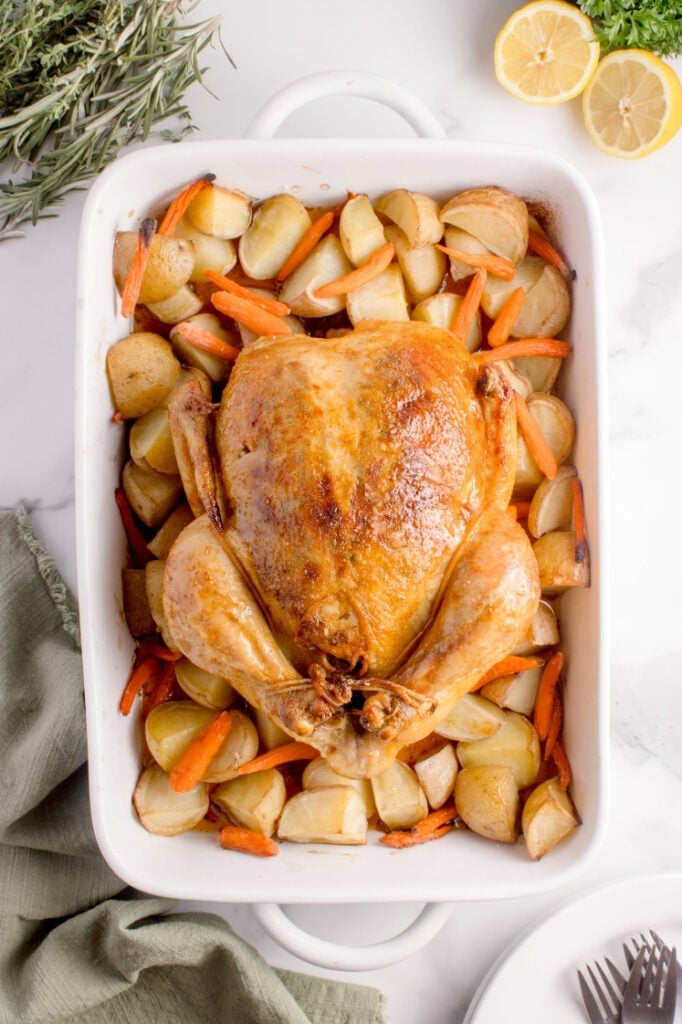
- Vegetables in the pan: Arrange baby potatoes, carrots, and onions around the chicken before roasting. Drizzle with oil and season lightly — they cook in the pan drippings and come out incredibly flavorful.
- Lemon herb version: Add fresh lemon zest and a squeeze of lemon juice to the compound butter, and place a halved lemon inside the cavity for a brighter, citrus-forward flavor.
- Spicy version: Add a pinch of cayenne or chili flakes to both the butter and the outside rub for a little heat that works well against the rich herb butter.
〰️ How to serve
- With potatoes — Serve alongside Boursin mashed potatoes, cheddar and chive mashed potatoes, or parmesan crusted potatoes. They all pair naturally with the pan drippings.
- Over rice or grains — Steamed white rice, brown rice, or cauliflower rice all make a great base with extra gravy spooned on top.
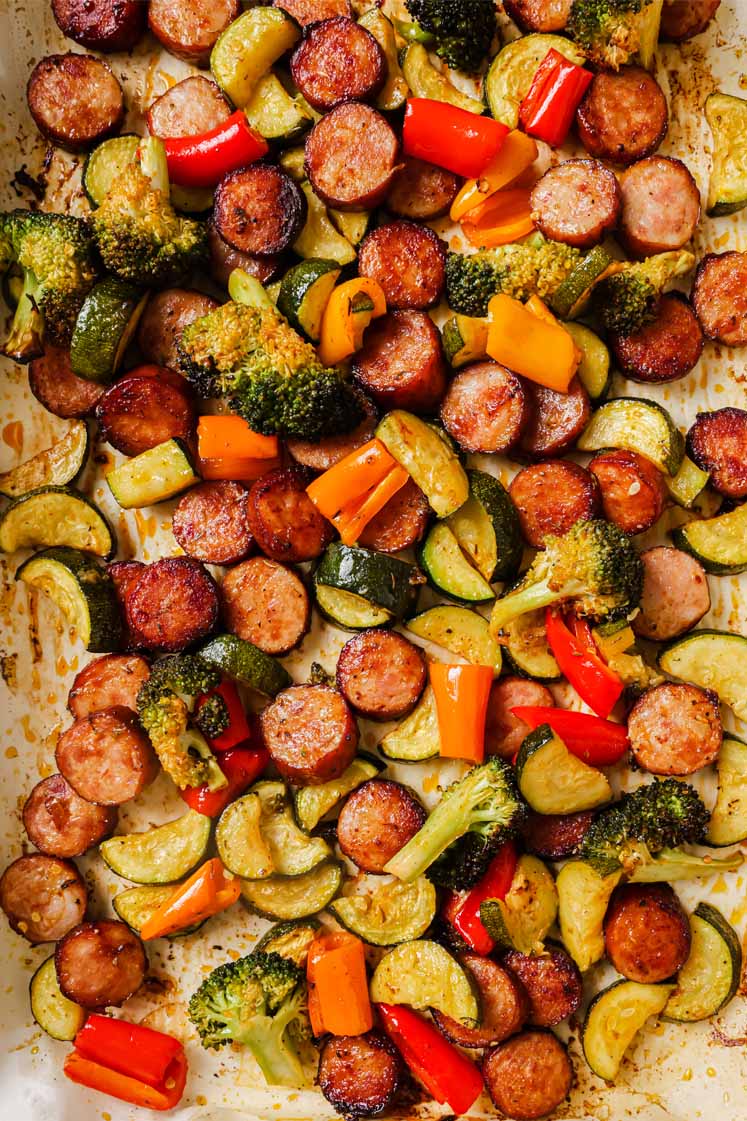
- With vegetables — Try roasted maple Parmesan carrots, baked sliced zucchini, or fresh green bean casserole for a full dinner spread.
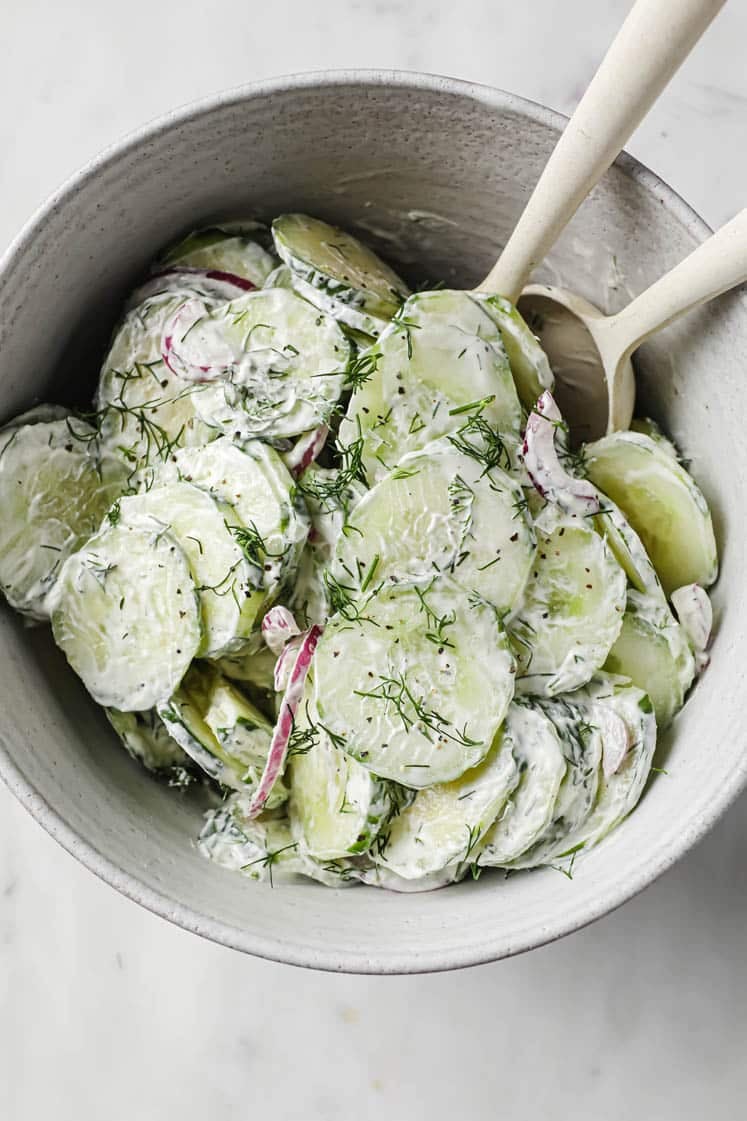
- With a salad — Bacon coleslaw or creamy dill cucumber onion salad both work well for a lighter plate.
- With bread — Rye dinner rolls or cheesy garlic pull apart bread are great for soaking up the pan juices.
💬 FAQs
How do I store leftovers?
Let the chicken cool to room temperature, no longer than 2 hours out of the oven. Store in an airtight container in the fridge for up to 3 to 4 days. Keep the pan juices in a separate small container — they’re great for reheating and as a base for soup or gravy.
How do I reheat it?
Preheat the oven to 325°F, place the chicken in an oven-safe dish with a splash of pan juices or chicken broth, cover loosely with foil, and heat until warmed through. For a quicker option, microwave in short increments with a little broth, covered with a damp paper towel.
Can I freeze leftovers?
Yes. Portion the meat into freezer-safe bags and freeze for up to 2 to 3 months. Thaw overnight in the fridge before reheating.
Can I prep this ahead of time?
Yes — the compound butter can be made a day ahead and kept covered in the fridge. You can also dry-brine the chicken overnight by salting it generously and refrigerating uncovered, which gives you crispier skin and more deeply seasoned meat when you’re ready to cook.
What size chicken should I use?
A 3 to 4-pound whole chicken works best for this method. It’s large enough to make a proper dinner and still manageable in a standard casserole dish or roasting pan.
Why tuck butter under the skin?
Sliding the butter directly under the skin gets the seasoning onto the meat itself rather than just the outside. As the chicken roasts, the butter melts and bastes the flesh from the inside, keeping the breast juicy and pushing the garlic and herb flavor all the way through.
Why do you pat the chicken dry?
Removing as much surface moisture as possible before seasoning is one of the most important steps. Moisture on the skin steams instead of browns, so the drier the skin goes in, the crispier it comes out.
Should I let the chicken come to room temperature first?
Yes — take it out of the fridge about 20 to 30 minutes before roasting. A cold bird cooks unevenly since the outside can overcook before the center is done.
Should I truss the chicken?
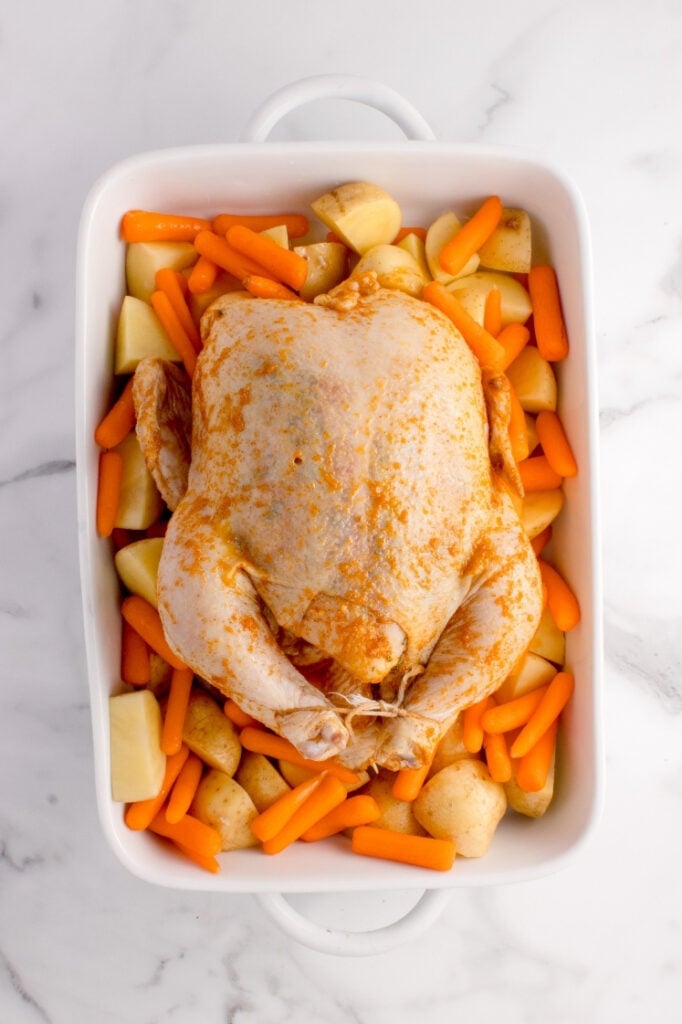
Trussing — tying the legs with butcher’s twine and tucking the wings under — helps the bird cook more evenly, keeps the shape compact, prevents the wing tips from drying out, and makes carving easier. It’s optional but worth doing if you want a tidier result.
How do I know when it’s done?
Use an instant-read thermometer inserted into the thickest part of the thigh without touching the bone. Pull the chicken at 160 to 165°F and let carry-over heat do the rest as it rests. Always rest before carving.
Can I roast vegetables in the same pan?
Yes — arrange root vegetables like baby potatoes, carrots, and onions around the chicken before it goes in. Drizzle with oil and season lightly. They cook in the drippings and come out with a lot of flavor. Broil briefly after removing the chicken if you want more color.
What do I do with the pan juices?
Spoon them over the chicken just before serving for extra flavor. They also make a simple gravy — pour into a small saucepan and reduce slightly over medium heat. Save any extra in the fridge for reheating or as a base for soup.
Do I need to brine the chicken first?
No — the compound butter under the skin already does a lot of the same work. It seasons and bastes the meat internally, so brining isn’t necessary unless you want to go the extra step for even more flavor.
📚 More chicken dinner recipes
🍽 Recipe
Email Recipe
Enter your email below and we’ll send you this recipe!
Oven Roasted Whole Chicken
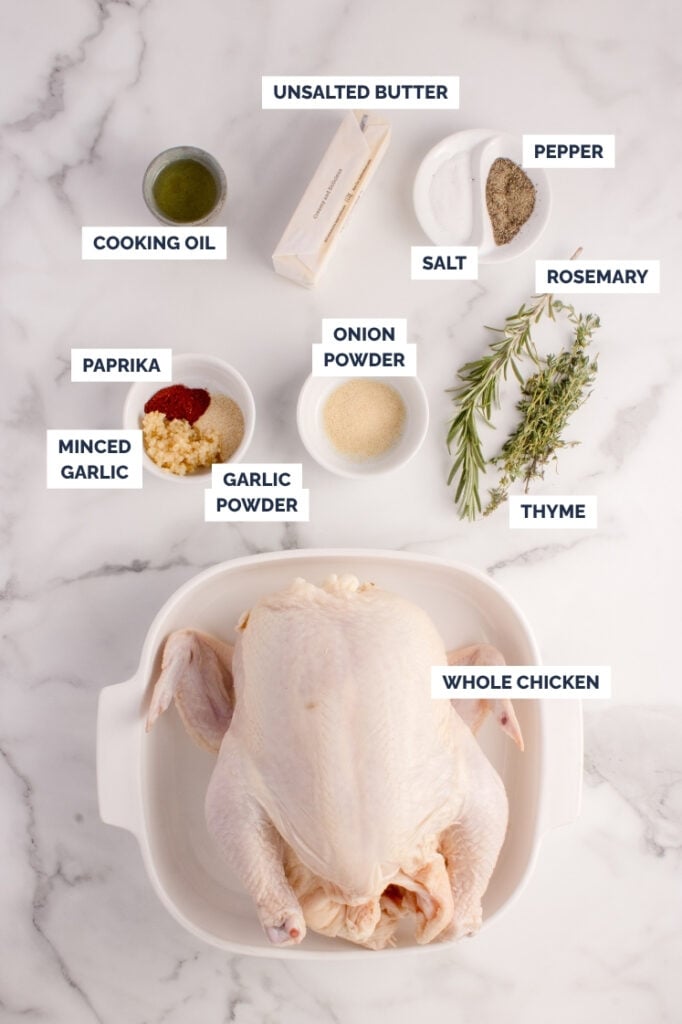
Ingredients
Compound butter
- 1 stick unsalted butte, softened
- 1 tablespoon minced garlic
- 1 teaspoon onion powder
- ½ teaspoon paprika, sweet or smoked
- 1 teaspoon fresh rosemary, chopped
- 1 teaspoon fresh thyme, chopped
- ½ teaspoon salt
Seasoning rub
- ¼–⅓ cup cooking oil, vegetable, canola, or avocado
- ½ teaspoon paprika
- 1 teaspoon garlic powder
- 1 teaspoon onion powder
- salt and pepper, to taste
Chicken
- 1 whole chicken, 3–4 pounds, skin on
Optional Vegetables
- 1 pound baby potatoes, halved or quartered
- 1 cup baby carrots
- 1 red onion, medium, sliced into rounds
Instructions
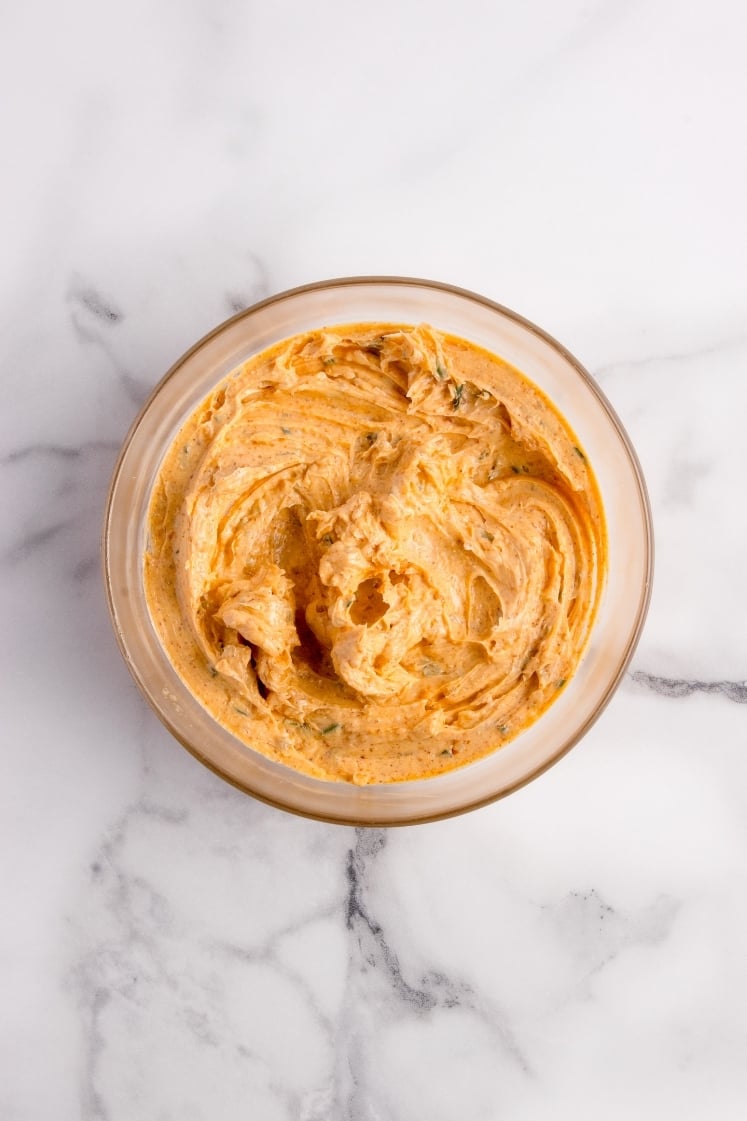
- Make the compound butter: In a small bowl, combine the softened butter, minced garlic, onion powder, paprika, rosemary, thyme, and salt. Mix until smooth. Set aside.
- Pat the chicken dry: Pat the whole chicken dry with paper towels. Dry skin is key for crispiness.
- Add butter under the skin: Carefully lift the skin on the breast and thighs. Slide the compound butter underneath and spread it evenly across the meat.
- Butter the cavity: Rub any remaining compound butter inside the cavity of the chicken.
- Make the seasoning rub: In a large bowl, mix the oil, paprika, garlic powder, onion powder, salt, and pepper until combined.
- Season the outside: Place the chicken in the bowl and rub the seasoning mixture all over the outside, including the legs and wings.
- Preheat the oven: Preheat to 425°F.
- Prepare the vegetables (optional): If adding vegetables, scatter the baby potatoes, baby carrots, and sliced red onion across the bottom of the casserole dish or roasting pan. Drizzle with a little oil and season with salt and pepper. Toss lightly to coat.
- Roast: Place the chicken breast side up in a casserole dish or roasting pan. Truss if desired. Roast for 1 hour to 1 hour 20 minutes, until an instant-read thermometer inserted into the thickest part of the thigh (not touching the bone) reads 160–165°F. If the skin starts to get too dark, cover loosely with foil.
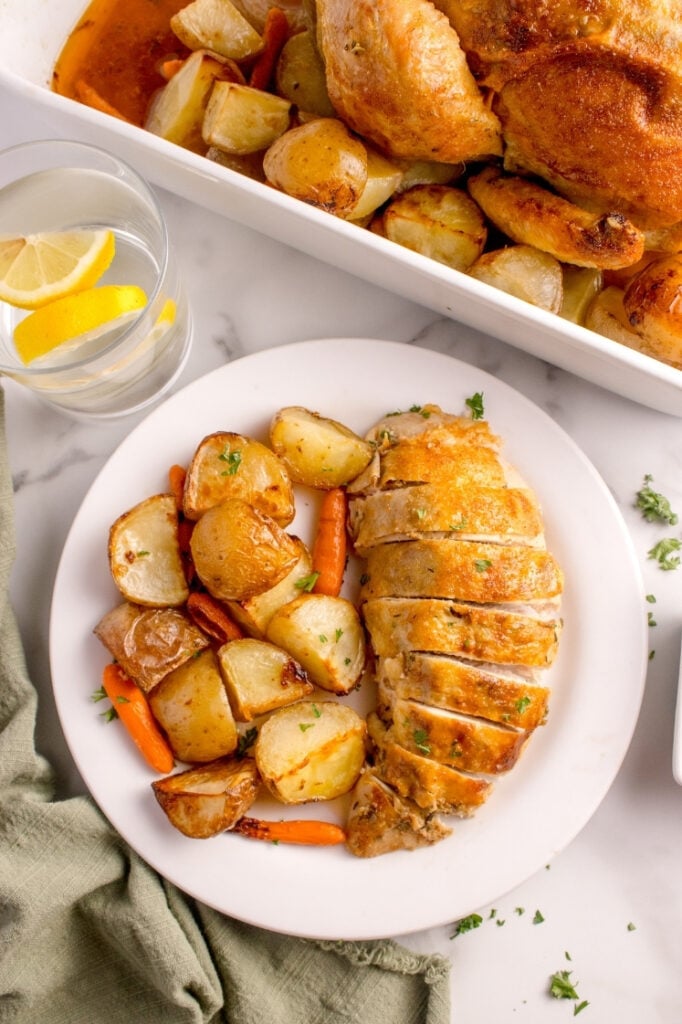
- Rest: Remove from the oven and let rest for 10–15 minutes before carving.
- Serve: Spoon the pan juices over the chicken before serving.












Leave a Reply