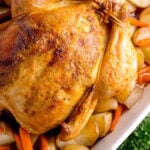
Oven Roasted Whole Chicken
This Oven Roasted Whole Chicken is a whole chicken seasoned two ways — a garlic-herb butter made with fresh rosemary, thyme, and garlic gets tucked directly under the skin to baste the meat from the inside as it roasts, while an oil-spice rub goes on the outside for a deeply golden, crispy skin. The two-layer approach is what separates a genuinely juicy roast from one that tastes like it was simply seasoned on the surface. From there the oven takes over, and the result is deeply golden skin with tender, flavorful meat all the way through.
Servings: 6 servings
Calories: 686kcal
Ingredients
Compound butter
- 1 stick unsalted butter softened
- 1 tablespoon minced garlic
- 1 teaspoon onion powder
- ½ teaspoon paprika sweet or smoked
- 1 teaspoon fresh rosemary chopped
- 1 teaspoon fresh thyme chopped
- ½ teaspoon salt
Seasoning rub
- ¼–⅓ cup cooking oil vegetable, canola, or avocado, plus a little more for the vegetables
- ½ teaspoon paprika
- 1 teaspoon garlic powder
- 1 teaspoon onion powder
- salt and pepper to taste
Chicken
- 1 whole chicken 3–4 pounds, skin on
Optional Vegetables
- 1 pound baby potatoes halved or quartered
- 1 cup baby carrots
- 1 red onion medium, sliced into rounds
Instructions
- Make the compound butter: In a small bowl, combine the softened butter, minced garlic, onion powder, paprika, rosemary, thyme, and salt. Mix until smooth. Set aside.
- Pat the chicken dry: Pat the whole chicken dry with paper towels. Dry skin is key for crispiness.
- Add butter under the skin: Carefully lift the skin on the breast and thighs. Slide the compound butter underneath and spread it evenly across the meat.
- Butter the cavity: Rub any remaining compound butter inside the cavity of the chicken.
- Make the seasoning rub: In a large bowl, mix the oil, paprika, garlic powder, onion powder, salt, and pepper until combined.
- Season the outside: Place the chicken in the bowl and rub the seasoning mixture all over the outside, including the legs and wings.
- Preheat the oven: Preheat to 425°F.
- Prepare the vegetables (optional): If adding vegetables, scatter the baby potatoes, baby carrots, and sliced red onion across the bottom of the casserole dish or roasting pan. Drizzle with a little oil and season with salt and pepper. Toss lightly to coat.
- Roast: Place the chicken breast side up in a casserole dish or roasting pan. Truss if desired. Roast for 1 hour to 1 hour 20 minutes, until an instant-read thermometer inserted into the thickest part of the thigh (not touching the bone) reads 165°F. If the skin starts to get too dark, cover loosely with foil.
- Rest: Remove from the oven and let rest for 10–15 minutes before carving.
- Serve: Spoon the pan juices over the chicken before serving.
Notes
Refrigerator storage: Let the chicken cool to room temperature, no longer than 2 hours out of the oven. Store in an airtight container in the fridge for up to 3–4 days. Keep the pan juices in a separate small container — they're great for reheating and as a base for soup or gravy.
Reheating: Preheat the oven to 325°F, place the chicken in an oven-safe dish with a splash of pan juices or chicken broth, cover loosely with foil, and heat until warmed through. For a quicker option, microwave in short increments with a little broth, covered with a damp paper towel.
Freezer storage: Portion the meat into freezer-safe bags and freeze for up to 2–3 months. Thaw overnight in the fridge before reheating.
Make ahead: The compound butter can be made a day ahead and kept covered in the fridge. You can also dry-brine the chicken overnight by salting it generously and refrigerating uncovered — this gives crispier skin and more deeply seasoned meat when you're ready to cook.
Pat the chicken dry: Removing as much surface moisture as possible before seasoning is one of the most important steps. Moisture on the skin steams instead of browns, so the drier the skin goes in, the crispier it comes out.
Trussing: Tying the legs with butcher's twine and tucking the wings under helps the bird cook more evenly, keeps the shape compact, prevents the wing tips from drying out, and makes carving easier. Optional but worth doing if you want a tidier result.
Vegetables in the pan: Baby potatoes, carrots, and sliced onion go in the bottom of the pan first, with the chicken set on top of them. Drizzle the vegetables with oil and season them lightly before the chicken goes in. They cook in the drippings and come out with a lot of flavor. If you want more color on them, move them to a metal sheet pan after the chicken comes out and broil briefly, since glass and ceramic baking dishes are not made for the broiler.
Brining: A wet brine is not needed here. If you want more deeply seasoned meat, use the overnight dry-brine in the make-ahead note above, and then go light on the salt afterward: skip the salt in the compound butter and season the outside rub to taste, since the bird is already salted.
Nutrition
Calories: 686kcal | Carbohydrates: 18g | Protein: 35g | Fat: 52g | Saturated Fat: 18g | Polyunsaturated Fat: 9g | Monounsaturated Fat: 21g | Trans Fat: 1g | Cholesterol: 176mg | Sodium: 352mg | Potassium: 768mg | Fiber: 3g | Sugar: 2g | Vitamin A: 3842IU | Vitamin C: 21mg | Calcium: 52mg | Iron: 2.5mg